



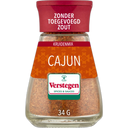
The first parsley pilot showed that sustainable, local herb cultivation in the Netherlands is feasible. Building on this success, a chain that is regenerative, organic, and of Dutch origin is now being developed. Scaling up is happening step by step: from cultivation and harvesting to processing, logistics, and sales.
Expansion
The first herbs are grown by Joost and Sanne from Zonnegoed, Wim and Marga from Saalland, and Ruben from Regenerative Farm Schevichoven. They work according to regenerative principles: without chemical pesticides, with minimal tillage, and increased crop diversity. For this first round, savory, marjoram, chervil, thyme, rosemary, oregano, sage, and lovage have been selected. Processing takes place at Schevichoven using solar panels and a modern drying installation, specially designed by drying expert Jan Diekema. This installation is aimed at maximizing the preservation of aroma and taste.
About Verstegen and Schevichoven
Verstegen plays an important role in making the herb and spice chain more sustainable. Driven by an intrinsic motivation to make chains fairer, more transparent, and future-proof, the company has been working for years to make the herb and spice chain more sustainable. The earlier parsley pilot project made it clear that more processing capacity was needed, a challenge that is now being solved through the cooperation with Schevichoven.
Schevichoven consists of three components whose combined mission is to accelerate the transition to regenerative agriculture in the Netherlands. With Regeneratieve Boerderij Schevichoven, the company cultivates 45 perennial crops on 26 hectares in Leersum according to regenerative principles. Through Schevichoven Groeit, it participates in projects and collaborations that support farmers in the transition to regenerative agriculture. In addition, Schevichoven Droogt offers high-quality drying facilities specifically developed for the optimal processing of herbs.
Jeroen Plesman from Schevichoven says the following: “The higher goal of this project is for as many farmers as possible, about thirty, to dedicate 5 hectares of their land to growing herbs in a regenerative way. These herbs are then dried and sold in the Netherlands.”
The project is made possible in part by ReGeNL. The first steps of this collaboration have now been taken and can be followed through the communication channels of the partners involved.
