



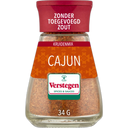

Verstegen is committed to preserving Indonesian pepper through sustainable farming methods
This is an original English article from FLMH , translated into Dutch and supplemented with a video from Fairfood , made in collaboration with Verstegen.
The "aGROWforests" project in Indonesia supports pepper farmers in implementing climate-resilient agricultural practices, with the aim of increasing their income.
Pepper has been traded from Indonesia since the late Middle Ages. Initially, the spice was primarily exported to China, but today the main markets are the US and Europe. However, cultivation is becoming increasingly unattractive for Indonesian farmers because current profit margins are far too low. To secure the future supply of pepper from Indonesia, the Dutch company Verstegen, the NGO Fairfood, and the association PT CAN established the "aGROWforests" project, which has been part of the "Initiative for Climate Smart Supply Chains" (I4C) since early December 2022. To understand how Indonesian farmers grow their pepper and how they make a living from it, the project partners interviewed three Indonesian farmers, Arofiq, Sapauni, and Umar, about their living conditions and perspectives on pepper cultivation.
Pepper cultivation was once profitable
Many Indonesian farmers used to plant pepper because it was profitable, says farmer Sapauni. The yield was enough to support herself and her child. Sapauni was able to build a house and buy a car with her earnings. However, these days, she can no longer make a living from pepper cultivation alone. This is mainly due to the drop in prices.
A few years ago, Sapauni received 180,000 rupiah per kilogram for her pepper, equivalent to about 10 euros. Today, she receives only 80,000 rupiah per kilogram, about 4.50 euros, which represents just 44 percent of the original price. Because prices are so low, more and more farmers are choosing to plant palm trees on their land. For example, farmer Arofiq now cultivates only a portion of his land with pepper.
Another major problem for Indonesian agriculture is unreliable weather patterns, making cultivation and harvest planning difficult. Pepper grower Umar explains: "The current rains are unpredictable, and the dry season isn't on time either, so ultimately, pepper cultivation is a mess." During such unpredictable weather changes, many pepper plants die, primarily due to the diseases they spread, says Umar. This is catastrophic for people who depend on agricultural products.
aGROWforests offers solutions
To address these challenges, the aGROWforests project aims to support Indonesian pepper farmers through agroforestry. Farmer Arofiq already has some experience with the project and is gradually transforming his farming system. "When I used to see weeds, I felt uneasy. But now I take it easy. Even when the weeds are high, my heart is still calm," he says. Farmer Umar also reports initial success: Since planting other crops between his pepper plants, diseases no longer spread throughout the entire agricultural area, but are contained within a small area.
All three farmers have hope for the new project. Arofiq hopes the project will help ensure that Indonesian pepper remains of high quality in the future. Sapauni wants to continue selling her pepper. Umar, whose ancestors were also pepper farmers, primarily wants to preserve the tradition of pepper cultivation so that future generations can make a living from it.
aGROWforests is funded as part of the "Initiative for Climate Smart Supply Chains" of the Federal Ministry for Economic Cooperation and Development and supported by the Deutsche Gesellschaft für Internationale Zusammenarbeit (GIZ).
🎬 Kyo Umareta
---
Want to read more about this project? Fairfood has published a detailed case study describing how agroforestry works in practice here. They also share successes and lessons learned.